
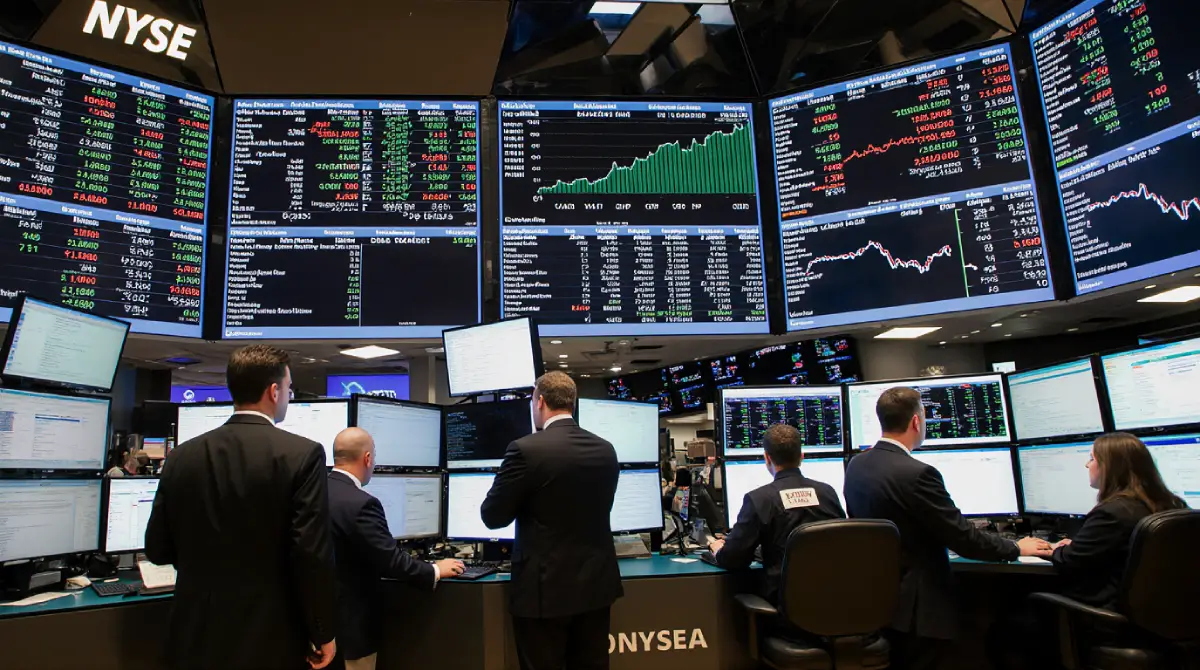
Big Money Mirrors Retail: institutional investors following retail are creating a striking trend in the stock market. Big money is mirroring retail traders in a stock-buying spree, highlighting market sentiment, emerging opportunities, and potential strategies for investors seeking smarter decisions.
Table of Contents
1. Institutional Investors Following Retail: Unpacking the Stock-Buying Spree
Institutional investors following retail is more than a passing trend; it’s a reflection of evolving market behavior where big players increasingly take cues from retail activity. Historically, institutional investors such as hedge funds, mutual funds, and pension funds have dictated market movements through large-scale trades and long-term strategies. However, the rise of retail trading platforms, social media influence, and accessible market data has altered the landscape, prompting institutions to adapt.
One key driver of this alignment is the significant buying pressure from retail investors. Platforms such as Robinhood, Webull, and others have empowered millions of small investors to coordinate trades around trending stocks. This coordinated retail activity has created noticeable momentum in certain equities, attracting institutional interest. Institutional investors following retail are capitalizing on this momentum, seeking to ride trends that retail investors initiate before broader market recognition occurs.
Another factor is the use of advanced analytics and social sentiment tracking. Institutions now monitor retail trading patterns, online forums, and social media chatter to anticipate demand surges. By mirroring retail buying behavior, institutions can position themselves advantageously in stocks experiencing sudden inflows, enhancing potential returns while managing risk.
It’s important to note that this stock-buying spree does not imply reckless copying. Institutional players deploy risk-adjusted strategies, including scaling positions, hedging, and monitoring liquidity. They are combining traditional fundamentals with insights from retail behavior to make calculated moves. For investors, observing these patterns provides valuable context: when institutional investors follow retail, it signals both opportunity and a shift in market dynamics that requires attention.
2. Why Institutional Players Are Mirroring Retail: Market Trends and Signals Explained
Institutional investors following retail are responding to multiple market trends and signals. The collective influence of retail investors has grown significantly in recent years, with coordinated buying often creating short-term price surges that attract institutional attention, signaling potential liquidity and momentum. Ignoring these signals could lead to missed short-term opportunities.
Market trends such as the rise of commission-free trading platforms and gamified investing apps have boosted retail participation. Institutional investors following retail monitor real-time trading volumes, sentiment metrics, and order flow to align with retail-driven momentum. Social media forums, including Reddit’s r/WallStreetBets, act as early-warning systems for spikes in retail interest, prompting institutions to evaluate potential trades proactively.
Volatility is another key factor. Retail-driven rallies often produce sharp price movements over short periods. Institutional investors following retail approach these movements cautiously, employing derivatives and hedging strategies to manage exposure. They analyze price patterns, market depth, and risk metrics before committing, ensuring engagement is informed rather than reactive.
The convergence of retail and institutional strategies also signals a broader shift in market sentiment. As retail investors identify undervalued or trending assets, institutional investors following retail recognize the importance of these signals for short-term gains and long-term positioning. Understanding why institutional investors follow retail helps other investors anticipate market movements, spot liquidity surges, and evaluate the interplay between momentum and fundamentals
3. The Impact of Institutional Investors Following Retail on Market Dynamics
When institutional investors follow retail, the market experiences notable shifts in dynamics. One significant impact is enhanced liquidity. Coordinated buying from both retail and institutional players amplifies trading volumes, reducing bid-ask spreads and making it easier to enter or exit positions efficiently. This alignment can create temporary price stability in trending stocks, reinforcing momentum.
Another consequence is volatility moderation. While retail-driven rallies are often perceived as erratic, institutional involvement introduces measured capital allocation, risk management, and hedging strategies. These mechanisms can smooth extreme swings and provide market participants with clearer pricing signals. For investors, this means opportunities to ride trends with reduced exposure to sudden reversals.
Market perception also evolves. When institutional investors follow retail, it validates retail activity, signaling that trends are backed by professional analysis and capital. This validation can attract additional investors, further fueling momentum. It also encourages institutions to integrate sentiment data into traditional valuation models, blending quantitative analysis with behavioral insights.
Furthermore, the mirroring phenomenon alters sector dynamics. Stocks experiencing retail-led buying often see inflows in specific sectors, prompting institutions to adjust sector allocation strategies. Observing these movements enables investors to identify sector trends early and make strategic allocation decisions. Ultimately, institutional engagement magnifies the market’s responsiveness to retail sentiment, creating a feedback loop that shapes short-term price behavior and long-term investment trends.
4. Opportunities for Smart Money: Lessons from Institutional Players Mirroring Retail
For savvy investors, observing institutional investors following retail provides actionable insights and strategic opportunities. First, it highlights the importance of monitoring market sentiment and social signals. By tracking retail momentum, investors can anticipate liquidity surges and identify undervalued or trending stocks before broader adoption occurs.
Smart money strategies include incremental participation. Investors can enter positions gradually as retail-driven momentum emerges, allowing for controlled exposure while capturing potential gains. Pairing this approach with hedging strategies used by institutional players enhances risk management.
Sector rotation is another opportunity. Stocks that experience retail-led buying often belong to sectors with emerging trends, such as technology, renewable energy, or healthcare innovation. Institutional players mirroring retail often capitalize on these trends early, signaling strategic allocation opportunities for investors seeking to optimize returns.
Finally, understanding behavioral patterns is key. Retail-driven rallies may be fueled by sentiment, but institutional engagement adds a layer of validation and structure. Observing the alignment between retail and institutional activity enables investors to differentiate between fleeting hype and sustainable trends, providing a competitive edge in portfolio management.
Conclusion
The phenomenon of institutional players mirroring retail represents a significant shift in market behavior. As institutional investors follow retail-driven momentum, they validate trends, enhance liquidity, and moderate volatility. Understanding institutional investors following retail provides valuable insights for investors seeking to navigate this dynamic environment. By analyzing market signals, monitoring social sentiment, and adopting strategic approaches inspired by both retail and institutional behavior, smart money can leverage these trends to optimize performance, manage risk, and seize opportunities in a rapidly evolving market landscape.
This FAQ explores key insights from Big Money Mirrors Retail: How Institutional Investors Following Retail Impact the Stock Market
Q1: What is meant by “Big Money Mirrors Retail”?
A1: It describes how institutional investors follow retail investor behavior, shaping their own trading strategies.
Q2: How do retail investors impact the stock market?
A2: Collective retail actions can drive price movements and market trends that institutions may react to.
Q3: Why do institutions track retail trading?
A3: To anticipate market shifts, manage risk, and potentially profit from emerging trends.
Q4: Does following retail always benefit institutions?
A4: No, it can be profitable but also risky if retail sentiment changes suddenly.
Q5: What market effects result from this behavior?
A5: It can increase volatility, amplify price swings, and create feedback loops between retail and institutional trading.